The Art of Balance: Composition Tips for Harmonious Landscape Photos
As an aspiring landscape photographer, it’s easy to get caught up in the beauty of the natural world without considering how to compose a photo. But the way you frame your shot can make all the difference in capturing the essence of your subject. Here are some composition tips for achieving balance and harmony in your landscape photos.
Rule of Thirds: Find Your Focus 🔍
One of the most basic and widely used composition techniques is the rule of thirds. This involves dividing your frame into a grid of nine equal parts, with two horizontal and two vertical lines intersecting to form nine sections. The idea is to position your subject or horizon on one of these lines, to create a more visually pleasing and balanced shot.
For example, imagine you’re taking a photo of a mountain range and you place the horizon in the middle of the frame. This can end up feeling unbalanced and lack interest. However, if you place the horizon on the bottom third of the frame and the mountains on the top third, the photo suddenly becomes more engaging and intriguing to look at.

Leading Lines: Show the Way 🛣️
Using leading lines is another great composition technique to draw the viewer’s eye into the scene. A leading line can be any object or pathway in the foreground that guides the eye towards the subject in the distance. It could be a winding river, a rocky pathway or a meandering road, just to name a few. The goal is to create a sense of depth and perspective in your photo, while also highlighting the subject.
For instance, you could take a photo of a stunning waterfall but if the photo just featured the waterfall alone, it wouldn’t be as effective as it could be. However, if you found a path that led towards the waterfall and took the photo along the path, it would be more effective in drawing the viewer into the photo.

Symmetry: Find Beauty in Balance 🌀
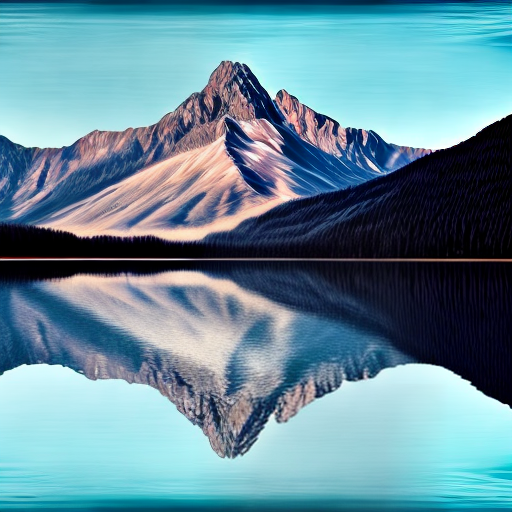
Symmetry is a technique that emphasizes perfect balance and harmony in a photo. This involves finding an object or scene that has a natural symmetry, such as a reflection on a still lake, or an archway in a building. When the photo is taken in center focus, this creates a visually stunning and peaceful image.
Taking a picture of a perfectly symmetrical scene can be challenging and it may require some patience and creativity. Look for objects and structures that can lend themselves to this technique, perhaps a row of trees lining a path or the reflection of a mountain range in a lake.
Framing: Create a Sense of Depth 🖼️
Framing is a technique that utilizes foreground objects to encapsulate the subject and create a sense of depth in the photo. By placing an object such as trees, rocks, or buildings in the foreground, the viewer can get a sense of the size and depth of the subject in the distance. This also adds to the overall composition and visual interest of the photo.
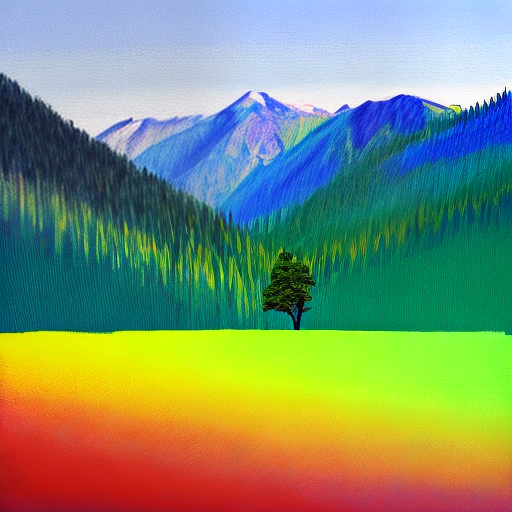
Framing can take on many forms, some examples include photographing blossom flowers that encircle and distance the subject. Or it may be a landscape shot of mountains in the background with a tree or two branches of trees in the foreground.
Conclusion: Finding Balance in Your Photography 📸
The art of balance in composition takes practice, patience and creativity. But by applying these tips, you can create landscape photos that are harmonious, engaging and visually stunning. Remember, the rule of thirds, leading lines, symmetry and framing are just a few techniques you can use to capture the beauty of the great outdoors.
Now it’s time to go outside and start exploring the world through your lens. Let’s make amazing memories! 🌄 📷
